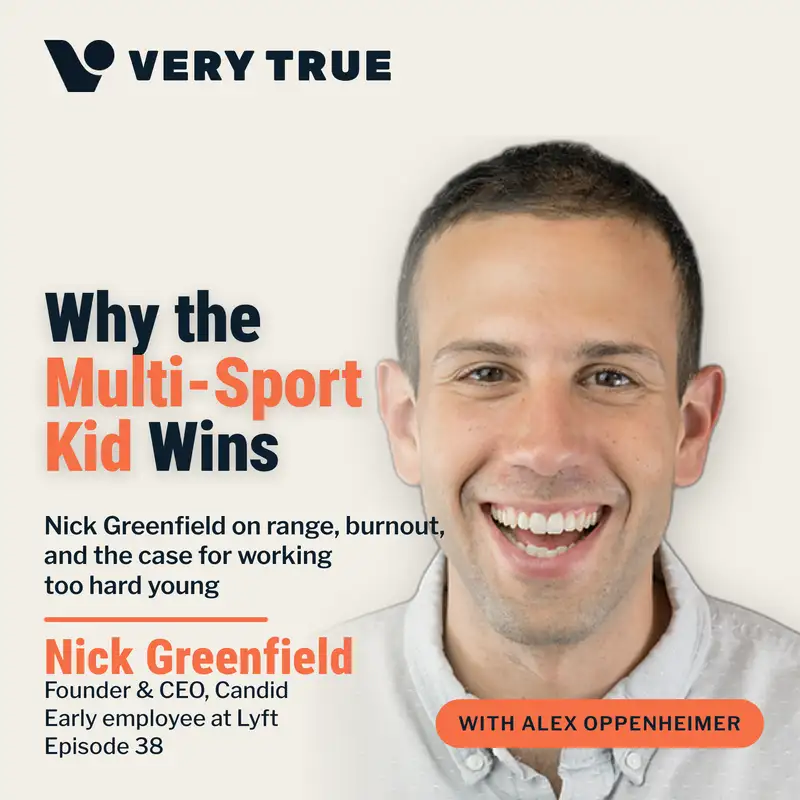
Why the Multi-Sport Kid Wins - Nick Greenfield on range, burnout, and the case for working too hard young
Alex sits down with Nick Greenfield, one of his oldest friends, for the first of three conversations recorded in a single sitting. They met at Stanford in 2008 through their randomly assigned freshman-year roommates and have stayed close through nearly twenty years, several cities, and a lot of career moves. This episode is about the early part of a career and the things that never show up on a resume. Nick shares how a DC baseball camp coach shaped his approach to work and life, why growing up as a multi-sport kid mattered more than going pro would have, and why choosing Ultimate Frisbee over a job in Brazil set the course for his twenties.
Alex and Nick dig into range versus spikiness and whether early specialization actually builds better brains or just burns kids out. They compare notes on what really prepares you for investment banking (a rocket science class, it turns out), why looking for work-life balance at 23 is the wrong goal, and whether San Francisco's hustle culture 15 years ago looked anything like the one people talk about today. Nick closes with advice for founders who have already raised: be impatient with your business, patient with the journey, and remember that almost all the value shows up in the outer years. The three episodes stand alone, so start with whichever one grabs you.
Guest: Nick Greenfield, CEO of Candid.
Episode Highlights
Coach Mac and the Wheel of Success: Nick traces his approach to business and life back to Home Run Baseball Camp in DC, where the coach rewarded fun, safety, hustle, and doing it the right way over how hard you threw.
Range vs. Spikiness: Alex brings up the Tiger Woods and Roger Federer contrast from David Epstein's Range, and Nick makes the case that nobody actually has the data to prove single-focus specialization builds better brains.
Burnout Is Real, Even for Kids: Nick describes burning himself out on baseball young enough to take a year off, and why he's letting his own kids try everything well into their teens.
The Three Classes That Prepared Alex for Banking: Financial accounting, a business school valuation class, and ME 140, the rocket science capstone that taught him to gather data, build a model, present it, and pull the all-nighter.
Why Balance Is the Wrong Goal at 23: Nick argues that your twenties are when you have the fewest responsibilities, the most energy, and the most pliable brain, so that's the time to push to the edge while mistakes are still recoverable.
Was SF Hustle Culture Real 15 Years Ago? Nick was inside Lyft while friends were at Uber, and explains why the answer depended entirely on the company and the role, plus the math behind why some jobs really need 18-hour days.
The Biggest Risk Is Not Taking One: Nick's advice for anyone early in their career, and why the ten most successful people he knows all did something their friends questioned.
Patient Journey, Impatient Business: Drawing on Danaher's Mitch Rales, Nick tells founders it takes ten years just to get a business going, and Alex translates it into DCF terms: the terminal value is more than 100% of the whole thing.
Full Chapter List
- (00:01) Cold open: why this became three episodes
- (01:52) Introduction and nearly twenty years of friendship since Stanford
- (02:59) Home Run Baseball Camp, Coach Mac, and the wheel of success
- (05:27) Not going pro, and choosing Ultimate over college baseball
- (06:20) Range vs. spikiness: Tiger Woods, Roger Federer, and Alpha School
- (08:20) The multi-sport kid, burnout, and raising kids without early specialization
- (12:26) What actually prepares you for investment banking: accounting, valuation, and rocket science
- (14:59) Figuring out school, pushing past your limit, and the VO2 max analogy for early careers
- (16:55) Why work-life balance at 23 is the wrong goal
- (19:53) Was SF hustle culture real 15 years ago? Uber vs. Lyft from the inside
- (21:31) The math behind 18-hour days and why some jobs need them
- (22:13) The biggest risk early in a career is not taking risk
- (23:51) Advice for founders who have raised: ten years just to get going
- (26:29) The DCF version of nose to the grindstone
- (27:09) NVIDIA, Jensen Huang, and what compounding looks like over decades
Links & Resources
- Candid: https://www.candidpro.com/
- Nick Greenfield on LinkedIn: https://www.linkedin.com/in/nick-greenfield-10189923/
- Verissimo Ventures: https://verissimo.vc/
- Alex Oppenheimer on LinkedIn: https://www.linkedin.com/in/alexoppenheimer/
- Range by David Epstein
Next in the series: Part two is the Lyft story, told from the inside. Part three is on business models, for founders and investors.
About Very True
Hosted by Alex Oppenheimer, Very True by Verissimo Ventures explores the honest, unvarnished stories of founders and the real problems they are solving. We look past the hype to find the truth in technology and entrepreneurship.